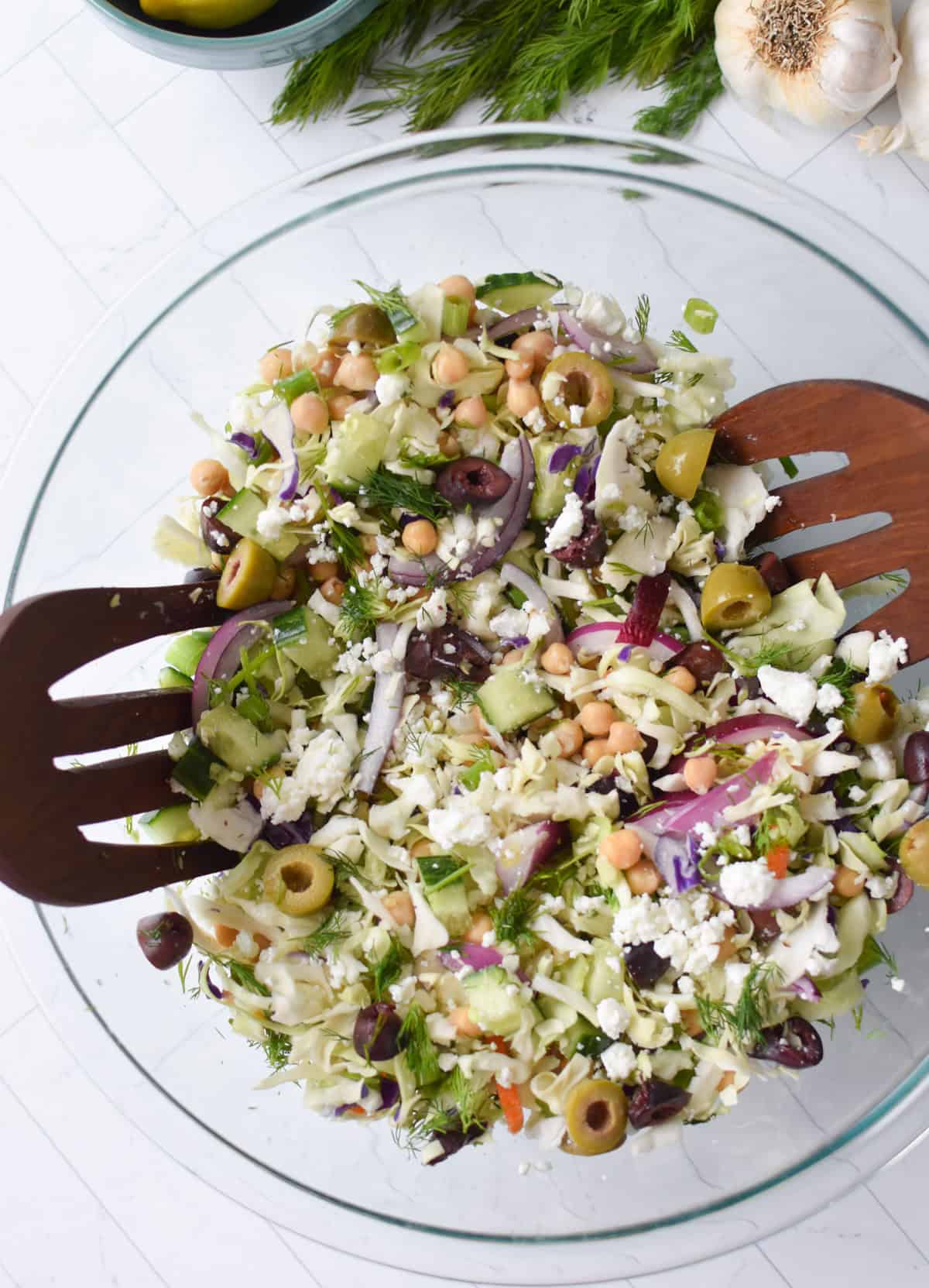
Master Greek Cabbage Salad: Shred, Massage, and Rest for Flavor
Brighten your culinary routine with the captivating crunch and zesty freshness of Greek Cabbage Salad, known in its homeland as
Lahanosalata. This isn't just another side dish; it's a vibrant celebration of Mediterranean flavors, combining finely shredded cabbage with a medley of crisp vegetables, tangy feta, and briny olives, all brought to life by a simple yet potent olive oil and lemon dressing. Forget everything you thought you knew about coleslaw – Lahanosalata offers a uniquely refreshing experience, maintaining a satisfying crunch while its flavors harmoniously meld into a sweet, sour, and savory symphony. It’s a dish that feels simultaneously gourmet and incredibly accessible, perfect for beginner cooks and seasoned foodies alike.
The beauty of Greek Cabbage Salad lies in its simplicity and the transformative power of a few key techniques. While the ingredients are humble, the method elevates them into a masterpiece of texture and taste. Whether you're seeking a light lunch, a healthy make-ahead option, or a show-stopping potluck contribution, mastering Lahanosalata means unlocking a world of fresh, vibrant flavor that delivers on every front. For a deeper dive into its many facets, explore our guide:
Vibrant Greek Cabbage Salad: Easy Lahanosalata for Any Meal.
What Makes Greek Cabbage Salad (Lahanosalata) So Special?
Lahanosalata stands out in the vast world of salads for its exceptional balance and versatility. Its traditional roots as a winter staple in Greece speak to the robustness of cabbage, yet its invigorating profile makes it a year-round favorite.
A Symphony of Flavors and Textures
At its heart, Greek Cabbage Salad is a brilliant interplay of contrasting elements. You'll typically find a blend of finely shredded green and red cabbages, offering both visual appeal and a subtle difference in bite. These form the canvas for an array of additions: thinly sliced carrots, crisp cucumbers, vibrant bell peppers, sharp red onion, and often, fresh herbs like dill or parsley. The inclusion of Kalamata olives provides a salty, briny kick, while crumbled feta cheese introduces a creamy, tangy counterpoint that is quintessential Greek.
The magic truly happens with the dressing. A simple emulsion of high-quality extra virgin olive oil, freshly squeezed lemon juice, and a touch of red wine vinegar creates a zesty, bright coating. This combination doesn't just dress the salad; it actively participates in transforming the cabbage, infusing it with a delightful sweet, sour, and savory harmony. Every forkful is a fiesta of color and texture, offering a bright pop that awakens the palate.
More Than Just a Winter Salad
While Lahanosalata traditionally graces Greek tables during the colder months, its refreshing qualities make it an ideal companion for any season. Its crisp texture and zesty dressing provide a welcome counterpoint to richer, heartier meals, effectively cutting through the intensity of grilled meats or slow-cooked stews.
In Greek homes, Lahanosalata frequently appears alongside beloved mains such as Pastitsio (Greek Pasta Bake), Moussaka (Minced Beef, Eggplant, and Potato Bake), Biftekia with Lemon Potatoes (Greek Baked Beef Patties), and comforting soups like Greek Lentil Soup (Fakes), Greek Chickpea Soup (Revithia), and Greek Lemon Chicken Soup (Avgolemono). It's also an indispensable fixture at barbecues, where its freshness beautifully complements smoky grilled meats. This ability to pair effortlessly with such a wide array of dishes underscores its incredible versatility. For more insights into its healthful and adaptable nature, check out
Lahanosalata Unveiled: The Healthy, Versatile Greek Cabbage Side.
The Core Pillars of a Perfect Greek Cabbage Salad: Shred, Massage, Rest
The true secret to an outstanding Lahanosalata lies not just in its ingredients, but in three fundamental preparation steps that transform humble cabbage into an irresistible dish. These steps are crucial for achieving the desired texture and allowing the flavors to fully develop.
Step 1: The Art of Fine Shredding
The first and arguably most critical step is to shred the cabbage very finely. This isn't just about aesthetics; it's about optimizing texture and flavor absorption. Finely shredded cabbage ensures an even texture throughout the salad, making it more pleasant to eat and allowing it to soften beautifully.
*
Tools of the Trade:
*
Mandoline: An absolute game-changer. A mandoline allows you to achieve ultra-fine, uniform shreds that are difficult to replicate with other tools. This consistency is vital for the cabbage to soften evenly.
*
Sharp Knife: If you don't have a mandoline, a sharp chef's knife works well. Take your time to slice the cabbage as thinly as possible. Halve or quarter the cabbage, remove the core, and then slice against the grain.
*
Food Processor: Some food processors come with a shredding blade attachment. While faster, it may produce thicker or less uniform pieces than a mandoline, which can affect the final texture. If using, opt for the thinnest shredding disk available.
For the best results, choose firm, heavy heads of cabbage with tight leaves. Both green and red cabbage are excellent choices, offering a slight difference in flavor and a significant boost in visual appeal.
Step 2: The Transformative Power of a Salt Massage
Once your cabbage is finely shredded, the next step is a simple yet profoundly impactful salt massage. This technique is often overlooked but is the key to reducing the natural toughness of cabbage, making it softer, more pliable, and easier to digest.
*
Why it Works: When you massage shredded cabbage with salt, the salt draws out moisture from the cabbage cells through osmosis. This process breaks down the tough cell walls, reducing the cabbage's rigidity and helping it become more tender. It also mellows any potential bitterness.
*
Technique: Place the finely shredded cabbage in a large bowl. Sprinkle a generous pinch (about 1/2 to 1 teaspoon) of fine sea salt over it. Using your clean hands, firmly but gently massage the cabbage for 1-2 minutes. You'll feel the cabbage start to soften and become slightly limp, and you might even see a small amount of liquid accumulating at the bottom of the bowl. Don't overdo it, as you still want a pleasant crunch.
*
Benefits: This step significantly improves the texture, making the cabbage less fibrous and more pleasant to chew. It also primes the cabbage to absorb the dressing more effectively, leading to a more flavorful salad overall. Be mindful not to add too much salt at this stage, as the dressing will also contain salt.
Step 3: The Crucial Resting Period
After the dressing has been added, the final, non-negotiable step for a truly exceptional Lahanosalata is to let it rest. This period is not merely a waiting game; it's an active part of the flavor development process.
*
Why it's Vital: Resting allows the acids in the lemon juice and vinegar, along with the olive oil, to further tenderize the cabbage. More importantly, it gives all the ingredients time to mingle and meld, allowing the flavors to deepen and harmonize. The cabbage continues to soften, soaking up the tangy dressing, transforming from a collection of individual ingredients into a cohesive, flavorful masterpiece.
*
Duration: Aim for at least 20-30 minutes of resting time, preferably in the refrigerator. If you have more time, an hour or even two will only enhance the flavors. Many find that Lahanosalata tastes even better the next day, as the flavors have had ample time to marry.
*
Impact: This step is what distinguishes a good Greek Cabbage Salad from an extraordinary one. It moves beyond a simple raw vegetable salad, achieving a complexity and depth that makes every forkful incredibly satisfying.
Crafting the Zesty Dressing and Beyond
While the shredded, massaged, and rested cabbage forms the backbone, the dressing is the soul of Lahanosalata, and thoughtful additions elevate it further.
The Quintessential Greek Dressing
The dressing for Greek Cabbage Salad is remarkably simple, relying on the quality of its core components:
*
High-Quality Extra Virgin Olive Oil: This is non-negotiable. A good, fruity olive oil will provide richness and a characteristic Mediterranean aroma.
*
Fresh Lemon Juice: Always use fresh lemons. Their bright, zesty acidity is crucial for balancing the flavors and helping to "cook" the cabbage during the resting period.
*
Red Wine Vinegar: A touch of red wine vinegar adds another layer of tang and depth, though some traditional recipes opt solely for lemon.
*
Seasoning: Salt, freshly ground black pepper, and dried Greek oregano are essential for seasoning. The oregano adds an authentic herbaceous note.
To prepare, simply whisk these ingredients together until well combined. Taste and adjust to your preference – perhaps a little more lemon for extra zing, or a touch more salt.
Elevating Your Lahanosalata with Customizations
While the basic recipe is delightful, Lahanosalata is incredibly forgiving and open to customization:
*
Vegetable Additions: Beyond the core cabbages, finely shredded carrots, thinly sliced bell peppers (red and yellow for color), crisp cucumber, and spring onions are common.
*
Herbs: Fresh dill, parsley, or even a hint of fresh mint can add an aromatic lift.
*
Nutty Crunch: Toasted walnuts or slivered almonds can be tossed in for an extra layer of crunch and richness.
*
Protein Boost: For a more substantial meal, consider adding cooked chickpeas, white beans, or grilled chicken strips.
*
Spice: A pinch of red pepper flakes can introduce a subtle warmth.
*
Cheeses: While feta is classic, other crumbly cheeses like goat cheese could offer an interesting variation.
Experiment with different combinations to find your perfect Lahanosalata. The key is to maintain balance and allow the freshness of the cabbage to shine through.
Serving Suggestions and Make-Ahead Magic
Greek Cabbage Salad is a chameleon of the culinary world, adapting beautifully to a multitude of meals and occasions. Its vibrant crunch and refreshing profile make it an ideal partner for rich, savory dishes, providing a necessary counterpoint that cleanses the palate.
Serve Lahanosalata alongside classic Greek main courses like succulent grilled lamb chops, juicy chicken souvlaki, or pan-fried fish. It’s also superb with heartier fare such as Pastitsio, Moussaka, or Keftedes (Greek Meatballs), where its acidity and freshness cut through the richness. Don't forget its role at barbecues, where it perfectly complements smoky meats straight from the grill. Its crispness also makes it a delightful addition to vegetarian meals, pairing wonderfully with lentil or chickpea soups.
One of Lahanosalata's greatest advantages is its suitability as a make-ahead dish. In fact, it often tastes even better after a few hours or even a full day in the refrigerator, as the cabbage continues to soften and absorb the dressing's flavors. Simply prepare the salad, dress it, and let it chill. When stored in an airtight container in the fridge, it will remain fresh and delicious for 2-3 days, making it an excellent option for meal prepping or entertaining.
Conclusion
Mastering Greek Cabbage Salad, or Lahanosalata, is a rewarding culinary journey that proves simplicity can indeed be profoundly delicious. By embracing the three core techniques – fine shredding, a gentle salt massage, and a crucial resting period – you unlock the full potential of this humble vegetable. The result is a vibrant, crunchy, and irresistibly flavorful salad that embodies the spirit of Mediterranean cuisine. Whether enjoyed as a healthy side, a light meal, or a colorful addition to your next gathering, Lahanosalata promises a fresh, zesty experience that will undoubtedly earn it a permanent spot in your recipe repertoire. Dive in, and savor the fresh vibrancy and endless versatility of this Greek classic.